
Can you sell an Austin rental house with tenants living in it?
Yes. In Texas a sale does not end a lease: the buyer takes the home subject to the existing lease, and the deposit liability moves to the new owner. The real decision is who you sell to. A buyer who wants to live there usually needs the home vacant within about 60 days of closing, so a long lease pushes you toward investor buyers, while selling at or after the lease ends opens up the whole market.
By Carmen Reese | The CLR Sales Group | November 24, 2026
A lot of Austin rental owners are asking this right now. Some are tired of being landlords. Some are watching the Texas 20% appraisal cap on non-homestead property end on December 31, 2026, with no renewal on the table. If you have not read it yet, my post on the 20% tax cap ending for Austin rental owners walks through what that means for your 2027 bill.
Whatever the reason, here is how selling an occupied rental actually works in Texas.
What Texas law says about the lease and the deposit
The lease survives the sale. The Texas State Law Library puts it plainly: when a property changes ownership, the new owner is bound by the existing lease. You cannot sell your way out of a lease, and neither can your buyer (foreclosure sales follow different rules).
The security deposit moves too. Under Texas Property Code section 92.105:
- The new owner is responsible for returning the tenant's deposit from the date they take title.
- The new owner has to give the tenant a signed statement saying they own the property, they are responsible for the deposit, and the exact amount.
- You (the seller) stay on the hook until the new owner receives the deposit or takes on that liability in writing.
In practice, the deposit is credited to the buyer at closing so the new owner holds it.
Showings depend on your lease. Texas has no state law setting how much notice a landlord gives before entering. It comes down to what your lease says (Texas State Law Library, updated Oct 2026). Pull out your lease before you list, read the access clause, and plan showings around it. A tenant who feels respected is the difference between a smooth sale and a hard one.
The contract piece most owners miss
When there is a residential lease on the property (written or oral), the TREC contract requires the Addendum Regarding Residential Leases. You choose one of two paths:
- The lease ends and the tenant is out by closing. If the tenant is still there at closing, you are in default. Only choose this if the lease end date (or a signed move-out agreement) clearly lands before your closing date.
- The buyer takes over the lease. You deliver copies of the lease documents, the deposit goes to the buyer at closing, and you confirm a list of statements about the lease (rent status, disputes, and so on). If one of those statements stops being true, you have a short window to fix it, or the buyer can terminate and get their earnest money back.
Once the addendum is signed, you cannot sign a new lease or change the current one without the buyer's written consent. That matters if your tenant asks to renew while you are under contract.
Who will buy it: the 60-day reality
This is where the lease end date drives everything.
- Owner-occupant buyers using conventional or FHA financing generally have to move in within 60 days of closing (Fannie Mae Selling Guide; HUD Handbook 4000.1 for FHA). A tenant with eight months left on the lease takes most of them out of the picture.
- Investor buyers may like an existing tenant, especially one paying market rent on time. But investors buy on the numbers, and they will run your rent against your price.
For context, the median lease in the Austin area was $2,100 a month in October, up 1.0% from a year ago, with about 2.3 months of lease inventory (Unlock MLS, October 2026 report). Know where your rent sits against that before you set a price for an investor.
Make sure to attend our next live Homebuyer Webinar (register here). It is built for buyers, but if you are selling a rental and buying your own next home, it covers the financing side you will need.
Your three options, side by side
Sell with the tenant in place
Best when the lease runs well past your target closing and your rent is strong. Your buyer pool is mostly investors. Expect fewer showing windows and price for that.
Sell at or after the lease ends
Best when the lease ends within a few months. You can list vacant, stage it, show it any time, and sell to the full pool of buyers, including people who plan to live there. With 6.2 months of supply across the Austin area in October, buyers have choices, so a clean, vacant, well-presented home matters. My post on selling over the holidays or waiting for spring covers the timing side.
Agree on an early move-out
Some owners offer the tenant help with moving costs or a rent credit in exchange for leaving early, in writing. It only works if the tenant agrees. Get the terms in a signed document, and have an attorney review it.
This is not legal or tax advice. Lease terms, the deposit, and the tax side of selling a rental (including depreciation and any 1031 exchange) depend on your situation, so confirm with a Texas real estate attorney and your CPA.
What I would do before listing
- Read the lease: end date, access clause, renewal terms, and any early-termination language.
- Talk to your tenant early and honestly. Tell them what to expect for showings.
- Decide your buyer: investor with the lease, or anyone after the lease ends.
- Run your net: price, rent, the 2027 tax picture without the 20% cap, and your capital gains.
- Gather the lease, the deposit amount, and rent records so the addendum is easy.
The numbers decide this, not the calendar alone. Once you see your net for each path side by side, the right one is usually obvious.
Frequently Asked Questions
Does a lease end when a house is sold in Texas?
No. In Texas the new owner is bound by the existing lease, so the tenant can stay through the lease term unless the lease itself says otherwise. Foreclosure sales follow different rules.
Who gets the security deposit when a rental is sold in Texas?
The new owner becomes responsible for the deposit from the date they take title, and must give the tenant a signed statement with the amount. The seller stays liable until the new owner receives the deposit or assumes that liability, so it is usually credited to the buyer at closing.
Can a buyer move into a house that has a tenant?
Only after the lease ends or the tenant agrees to leave. Owner-occupant buyers using conventional or FHA loans generally must move in within 60 days of closing, so a long remaining lease limits your buyers to investors.
How much notice does a Texas landlord have to give for showings?
Texas has no state law setting a notice period for landlord entry. It depends on the access terms in your lease, so read that clause before you schedule showings.
Should I sell my Austin rental before the 20% appraisal cap ends?
The cap ends Dec 31, 2026 and is not being renewed, so a rental you keep may see a larger increase in its 2027 appraised value. Whether to sell depends on your rent, your net, and your taxes, so run the numbers with your CPA and an agent.
Selling an occupied Austin rental is very doable in Texas. The lease stays with the house, so your lease end date decides who your buyer is and how you should price it.
If you want to see your net for selling with the tenant, selling after the lease ends, and keeping it, book a free 15-minute consult with Carmen. And make sure to attend our next live Homebuyer Webinar (register here) if your next move is buying.
Sources: Texas State Law Library (updated Oct 2026); Texas Property Code section 92.105; TREC Addendum Regarding Residential Leases; Fannie Mae Selling Guide; HUD Handbook 4000.1; Bloomberg Law (June 2026); Unlock MLS October 2026 Central Texas Housing Report.
About Carmen Reese
Carmen Reese is an Austin native and the founder of The CLR Sales Group at Real Broker, LLC. She has been selling homes in the Austin area for almost a decade. Before real estate she worked as a data analyst, and she is a Certified Negotiation Expert, so every pricing and offer decision starts with the numbers. Carmen and her team are RealTrends Verified in the top 1.5% of real estate professionals nationally. She hosts the weekly Homebuyer Webinar and The Austin Homebuyer Academy on YouTube.
FROM OUR BLOG

Keep Your Over-65 Tax Ceiling When You Move in Texas
Can you keep your over-65 property tax ceiling when you move in Texas? Yes, partly. When you sell a home with an over-65 (or disabled) school tax ceiling and buy a new homestead in Texas, the ceiling can transfer, but as a percentage, not a dollar amount. If you were paying 25% of what your school t

Buying or Selling an Austin Home With Solar Panels
What happens to solar panels when you buy or sell a home in Austin? It depends on whether the panels are owned, financed, or leased. Owned panels simply convey with the house. Financed or leased panels come with a contract that has to be paid off at closing or transferred to the buyer, and in Texas
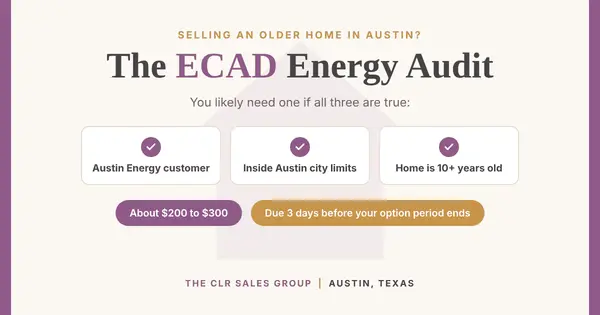
Austin ECAD Energy Audit: What Home Sellers Must Do
Do you need an ECAD energy audit to sell your home in Austin? Yes, if your home is inside Austin city limits, served by Austin Energy, and 10 years old or older. Under the City of Austin's Energy Conservation Audit and Disclosure (ECAD) ordinance, you need an energy audit from a certified auditor (o